

Every week, our export team fields calls from EU distributors who thought a CE certificate was all they needed — until customs held their shipment.
To legally sell Chinese-made electric wheelchairs in the EU, importers must ensure full compliance with MDR (EU) 2017/745, including correct device classification, a complete technical file, valid CE marking, proper labeling, and clear allocation of responsibilities among the manufacturer, EU Authorized Representative, and importer.
The CE mark 1 on an electric wheelchair is not a single approval stamp MDR (EU) 2017/745 2. It is the visible outcome of meeting multiple legal, technical, and documentation requirements under several EU regulations. Whether you are a first-time importer or an experienced medical equipment distributor, understanding the exact regulatory role you take on is the first step to avoiding costly delays. Let us walk through every layer of this process so you can source with confidence.
How can I verify that my Chinese supplier's CE MDR certification for electric wheelchairs is authentic and up to date?
We have seen buyers lose months and thousands of euros because they trusted a PDF certificate without checking a single detail behind it. Fake or outdated CE documents are more common than most people expect.
To verify a Chinese supplier's CE MDR certification, cross-check the EU Declaration of Conformity against the named Notified Body's NANDO database listing, confirm the certificate covers the exact product model and intended purpose, and request the underlying test reports tied to harmonized standards like EN 12184.
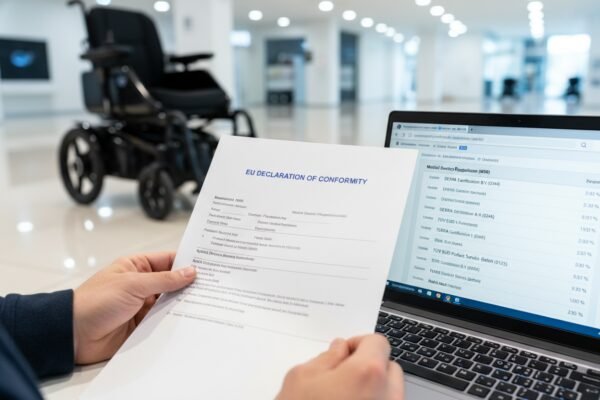
Why a CE Certificate Alone Is Not Enough
A "CE certificate" from a testing house is not the same as legal CE marking under MDR. The manufacturer is the one who declares conformity. A test report from a lab supports that declaration but does not replace it. When our quality team prepares export documentation, we always include the EU Declaration of Conformity 3 as a separate document signed by the legal manufacturer. This declaration must reference MDR 2017/745, the specific product model, and the applicable standards.
Many suppliers show a generic certificate that covers a product family. That is a red flag. The certificate must match the exact model, configuration, battery type, and intended purpose of the wheelchair you plan to import.
Practical Steps to Authenticate Documents
Here is a checklist you can follow before placing any order:
- Ask for the EU Declaration of Conformity (DoC). It must name the manufacturer, the product, the regulation (MDR 2017/745), and the applicable standards.
- Check NANDO. If a Notified Body is involved (for Class IIa or higher), search the NANDO database 4 on the European Commission website. Confirm the body is listed, active, and authorized for MDR.
- Match model numbers. Every document — DoC, test reports, labeling artwork — must reference the same model number and configuration.
- Request test reports. A valid DoC without supporting test evidence is a warning sign. Ask for reports against EN 12184, EN 60601-1, and EN 60601-1-2 at minimum.
- Verify the scope. Some certificates cover "mobility scooters" but not "electric wheelchairs." The product description and intended purpose must align.
Key Documents and What to Look For
| Document | What It Should Include | Red Flag If Missing |
|---|---|---|
| EU Declaration of Conformity | Manufacturer name, product model, MDR 2017/745 reference, applicable standards, signature, date | No regulation reference or unsigned |
| Test Reports (EN 12184, etc.) | Exact model tested, test lab accreditation, pass/fail results, date of testing | Generic report or different model number |
| Notified Body Certificate | NB number, product scope, validity dates, MDR reference | Expired, wrong product scope, NB not on NANDO |
| Risk Management File | ISO 14971 5 reference, hazard analysis, risk controls | No file available or "in progress" |
Watch for Common Deception Patterns
Some suppliers issue certificates from bodies that are not Notified Bodies under MDR. A Chinese testing lab can issue a test report, but only an EU-recognized Notified Body can issue a certificate for Class IIa or higher devices under MDR. For Class I devices, no Notified Body certificate is needed, but the full technical file and DoC must still exist. If a supplier claims Notified Body involvement for a Class I wheelchair, ask why. It may indicate confusion about classification — or an attempt to make paperwork look more impressive than it is.
What specific technical documentation do I need from my manufacturer to clear EU customs smoothly?
Our logistics team has tracked the most common reasons EU customs authorities hold electric wheelchair shipments, and incomplete documentation tops the list every time.
You need the EU Declaration of Conformity, complete technical documentation including risk management and test reports, CE-marked labeling artwork, instructions for use in the required EU languages, battery compliance certificates such as UN38.3, and proof of a registered EU Authorized Representative or responsible importer.
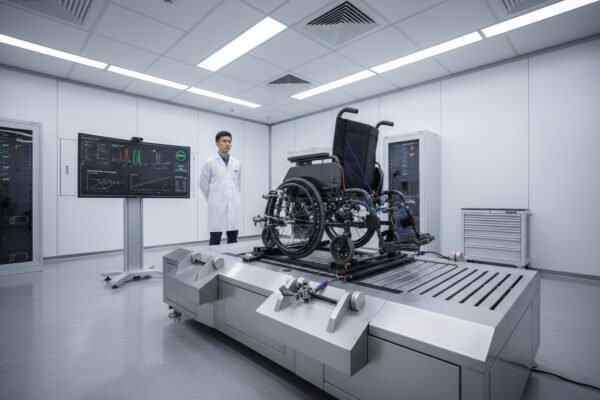
The Core Technical File
Under MDR, the technical documentation is not one document. It is a structured file containing everything that proves the device is safe and performs as intended. When we prepare shipments from our Foshan facility, our regulatory team compiles the file to cover every aspect of the specific model being exported.
The technical file should include:
- Product description and specifications (including all variants)
- Design and manufacturing information
- General Safety and Performance Requirements (GSPR) checklist with references
- Risk management file per ISO 14971
- Test reports per applicable harmonized standards 6
- Clinical evaluation report (even for Class I, a clinical evaluation is required under MDR)
- Labeling and instructions for use
- Post-market surveillance plan
Battery and Charger Documentation
Electric wheelchairs almost always use lithium-ion battery packs. Batteries trigger their own compliance requirements, both for product safety and for transport. Missing battery documentation is one of the fastest ways to get a shipment detained.
| Battery/Charger Document | Standard/Regulation | Purpose |
|---|---|---|
| UN38.3 Test Summary 7 | UN Manual of Tests and Criteria | Required for transport of lithium batteries by air, sea, or road |
| IEC 62133 Test Report | IEC 62133-2 (Li-ion) | Proves battery cell and pack safety under normal and abnormal conditions |
| Battery MSDS / SDS | Applicable transport regulations | Required by carriers and customs for hazardous goods classification |
| Charger Safety Report | EN 60335 or EN 62368-1 | Proves the charger meets electrical safety requirements |
If the wheelchair comes with a separate charger, that charger may need its own CE marking and DoC under the Low Voltage Directive (2014/35/EU) 8 or the relevant safety standard. This is often overlooked.
Language and Labeling Requirements
Instructions for use (IFU) must be provided in the official language of each EU member state where the device is sold. If you are selling in Germany, France, and Italy, you need German, French, and Italian IFUs. The CE marking itself must meet specific size and proportion rules. Labels must include:
- Manufacturer name and address
- Product name and model number
- CE mark
- UDI (Unique Device Identifier 9) where applicable
- Batch or serial number
- Warnings and safety symbols per ISO 15223-1
Customs-Specific Tips
EU customs may ask for:
- The DoC at the point of entry
- Proof that an EU Authorized Representative is appointed (if the manufacturer is outside the EU)
- Evidence of CE marking on the product and packaging
- Battery transport documentation
Our recommendation is to include a customs-ready document pack in every shipment container. This pack should have printed copies of the DoC, a summary of the technical file, battery transport documents, and a contact sheet for the EU Authorized Representative. Digital copies should also be available on request.
How do the latest MDR classification rules affect the electric wheelchairs I am importing for my medical distribution business?
When we first adapted our product lines for MDR, our regulatory engineers spent weeks reclassifying every model because not all electric wheelchairs land in the same regulatory bucket.
Under MDR 2017/745, most standard electric wheelchairs are classified as Class I medical devices, allowing manufacturer self-declaration. However, models with specific intended medical purposes, active therapeutic functions, or diagnostic features may fall into Class IIa, which requires Notified Body involvement and significantly more regulatory evidence.
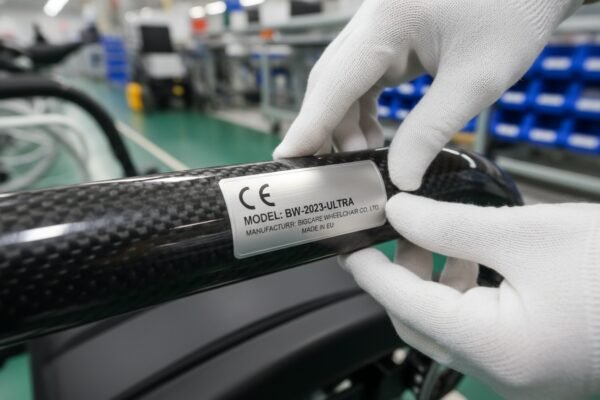
Understanding the Classification Logic
MDR classification is based on the device's intended purpose, not just its physical design. The classification rules are in Annex VIII of the regulation. Electric wheelchairs are active devices — they rely on an electrical energy source. Most standard power wheelchairs that simply provide mobility for users with disabilities are classified as Class I active devices.
But classification is not automatic. If the wheelchair is designed to deliver a therapeutic effect (such as active postural correction), or if it incorporates diagnostic sensors that influence medical treatment decisions, the classification can shift upward to Class IIa or even higher.
Class I vs. Class IIa: What Changes?
| Factor | Class I | Class IIa |
|---|---|---|
| Notified Body required? | No (self-declaration) | Yes |
| Technical file required? | Yes | Yes (more detailed) |
| Quality management audit? | Recommended (ISO 13485 10) | Mandatory (ISO 13485, NB audit) |
| Clinical evaluation? | Yes (literature-based usually sufficient) | Yes (may require clinical data) |
| Post-market surveillance? | Yes (PMS plan + report) | Yes (PSUR required) |
| Time to market | Faster | Slower |
| Cost | Lower | Higher |
Common Classification Mistakes
One frequent error among importers is assuming that all powered mobility products are the same under MDR. They are not. A mobility scooter marketed as a consumer convenience product may not even be a medical device. A power wheelchair prescribed by a clinician for a patient with a spinal cord injury is clearly a medical device. The intended purpose written in the technical file and marketing materials determines classification.
Another mistake is relying on the supplier's classification without independent verification. We always recommend that importers confirm classification with their own regulatory advisor, because the importer shares legal responsibility for placing a correctly classified device on the EU market.
The "Intended Purpose" Trap
Marketing language can accidentally change a product's classification. If your product listing claims the wheelchair "treats pressure injuries" or "corrects spinal alignment," you may have moved the product from Class I into Class IIa territory. The technical file's stated intended purpose must match all marketing materials, instructions for use, and sales claims. Overstating medical benefits is not just a marketing risk — it is a regulatory risk.
Smart Features and Cybersecurity
Newer electric wheelchairs may include Bluetooth connectivity, app-based controls, or IoT monitoring. Under MDR's General Safety and Performance Requirements (GSPRs), any connected device must address cybersecurity risks. This includes protecting patient data, securing wireless communications, and ensuring that software updates do not compromise device safety. If your wheelchair has smart features, confirm that the technical file addresses Annex I Section 17.2 of MDR, which covers electronic programmable systems and IT security.
What steps should I take to audit a Chinese factory's quality management system for MDR compliance before placing a bulk order?
Before we ship a single unit to any EU distributor, our internal QMS goes through layers of checks — but we also know that not every factory in China operates this way, which is exactly why buyer-side audits matter.
To audit a Chinese factory for MDR compliance, verify ISO 13485 certification from an accredited body, conduct an on-site audit covering design control, incoming inspection, in-process checks, final testing, traceability, and change management, and confirm the factory maintains a living technical file that matches current production.
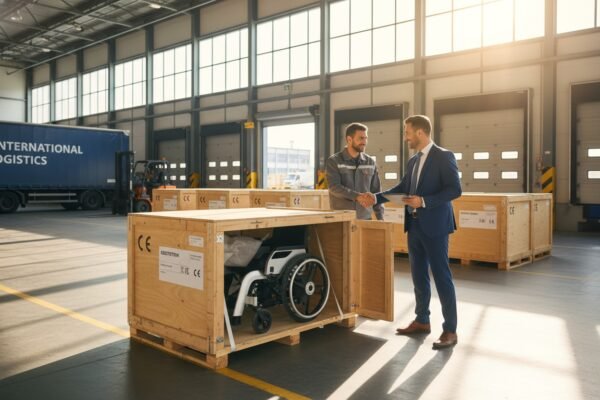
Why ISO 13485 Is the Starting Point
ISO 13485 is the internationally recognized quality management standard for medical device manufacturers. Under MDR, having a certified QMS is not just good practice — it is functionally required. For Class IIa and above, the Notified Body will audit the QMS directly. For Class I, there is no NB audit, but the manufacturer must still demonstrate a system that ensures consistent product quality.
When evaluating a Chinese supplier, ask for:
- ISO 13485 certificate (check the issuing body's accreditation)
- Scope of the certificate (does it cover the wheelchair models you are purchasing?)
- Latest audit report or surveillance audit results
- Any nonconformities and their corrective actions
On-Site Audit Essentials
A remote document review is useful but never sufficient. On-site audits reveal what documents cannot. Here is what to examine during a factory visit:
Incoming Quality Control (IQC): Does the factory inspect raw materials and components? Are there acceptance criteria for motors, batteries, controllers, and frame materials? Are records kept?
In-Process Quality Control (IPQC): Are there checkpoints during assembly? Who inspects, and against what criteria? Are deviations recorded and addressed?
Final Quality Control (FQC): Is every finished wheelchair tested before packaging? What tests are performed — braking, speed, battery charge, stability? Are test results traceable to individual units?
Design Control: Does the factory follow a design control process per ISO 13485 Clause 7.3? Can they show design inputs, outputs, verification, and validation records for the model you want to buy?
The "Spec Lock" Problem
This is one of the biggest real-world sourcing risks. A factory passes initial testing on a specific configuration. Then, during production, they swap a motor, change a battery cell supplier, or modify a controller board — without updating the technical file or revalidating performance. The product you receive may look the same but perform differently from what was tested.
To protect yourself:
- Include a change control clause in your supply agreement. Any change to the bill of materials, software, or manufacturing process must be communicated and approved before implementation.
- Request a bill of materials (BOM) for the exact model and lock it as a contract annex.
- Define critical components (motor, battery, controller, charger) and require that any substitution triggers a re-test or at minimum a documented risk assessment.
Red Flags During a Factory Audit
| Red Flag | What It Means | What to Do |
|---|---|---|
| ISO 13485 certificate from an unaccredited body | The certification may not be recognized by EU authorities | Verify the certification body on IAF or relevant accreditation databases |
| No incoming inspection records | Components are not checked before use | High risk of variable quality; reconsider the supplier |
| Test equipment not calibrated | Measurements may be inaccurate | Ask for calibration certificates; if missing, do not trust test results |
| No change control procedure | Specification changes happen without documentation | Insist on a written change management procedure before ordering |
| Technical file "managed by a third party" with no factory access | The factory may not understand its own compliance documentation | The manufacturer must own and maintain the technical file; outsourcing maintenance is acceptable, but the factory must have access and understanding |
| No traceability from finished product to component batch | Recalls would be impossible to manage effectively | This is a fundamental QMS failure; proceed with extreme caution |
Post-Audit Follow-Up
A single audit is a snapshot. MDR compliance is ongoing. After the initial audit, establish a schedule for surveillance checks. Require the factory to report any changes to the QMS, production process, or component suppliers. If possible, arrange for periodic third-party inspections, especially before large shipments.
Our experience is that the most successful EU market entries come from treating compliance as part of product development and ongoing production discipline — not as a final paperwork exercise before shipping.
Conclusion
Sourcing MDR-compliant electric wheelchairs from China is entirely achievable when you build compliance into procurement from the very start rather than treating it as a last-minute paperwork exercise.
Footnotes
1. Explains the mandatory compliance mark for medical devices in the European Union. ↩︎
2. Official EU legislation portal for the Medical Device Regulation (EU) 2017/745. ↩︎
3. Essential legal document where manufacturers declare device compliance with EU regulations. ↩︎
4. Official European Commission database for finding designated Notified Bodies. ↩︎
5. International standard for applying risk management to medical devices throughout their lifecycle. ↩︎
6. Explains the role of harmonized standards in demonstrating conformity with EU regulations. ↩︎
7. Mandatory international standard for the safe transport testing of lithium batteries. ↩︎
8. Official EU directive regulating safety aspects of electrical equipment within specific voltage limits. ↩︎
9. System for clear and unambiguous identification and traceability of medical devices in the EU. ↩︎
10. Comprehensive and authoritative Wikipedia overview of ISO 13485, a quality management system standard for medical devices. ↩︎