
Buyers often overlook maintenance until infected equipment triggers a ward outbreak 2. When our engineers design medical mobility aids, we prioritize rapid hygiene to solve this daily sanitation nightmare completely.
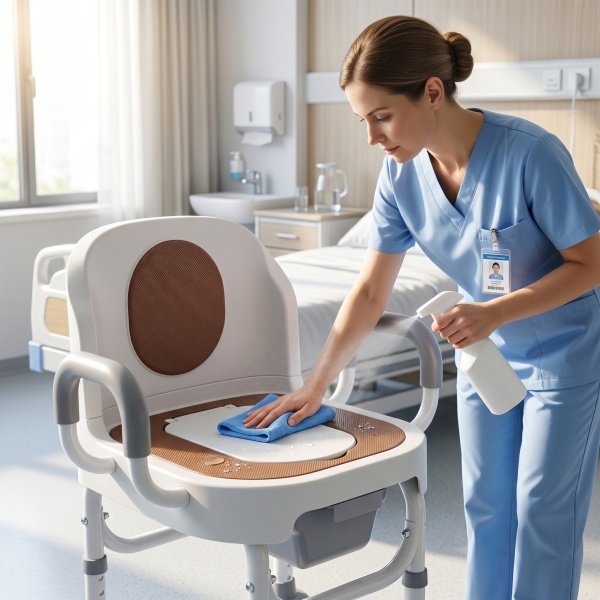
Evaluating cleaning ease requires inspecting material resistance to hospital-grade disinfectants, seamless frame constructions that prevent residue buildup, and the quick detachability of key components like buckets and seats. Buyers must verify that mobile commode chairs support rapid wipe-downs without corroding or trapping hazardous bacteria in hidden crevices.
Read on to discover the exact design features and materials that will streamline your daily maintenance workflows and protect your facility high-level disinfection 3.
What materials should I prioritize to ensure the chair withstands harsh chemical disinfectants?
Corroded frames from bleach wipe-downs destroy your equipment investment quickly. During our material stress tests, we see how choosing the wrong plastics creates hazardous bacteria traps. Let us fix this.
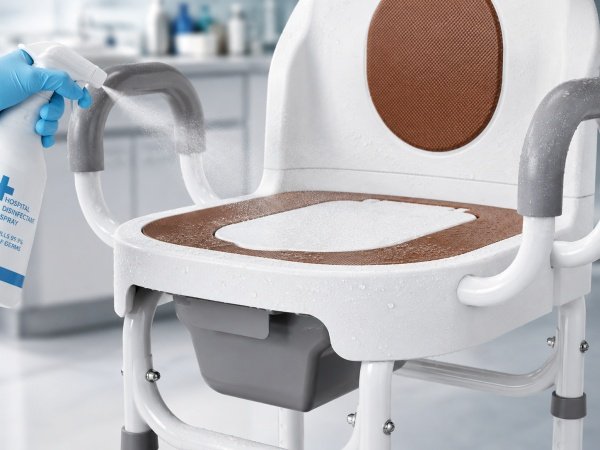
Prioritize high-grade, non-porous plastics for seats and buckets, alongside rust-resistant stainless steel or powder-coated aluminum for the frame. These durable materials withstand repeated exposure to harsh chlorine or hydrogen peroxide disinfectants without degrading, rusting, or developing micro-cracks that harbor dangerous pathogens.
The Risk of Porous Surfaces
When evaluating options for your facility, avoid soft, porous materials. Vinyl padded seats might feel comfortable, but they often split at the seams. Once a seam breaks, moisture and bacteria enter the foam core. You cannot sanitize a contaminated foam cushion effectively. Instead, look for solid, molded polyurethane or high-density polyethylene 4. These industrial plastics repel liquids and survive daily scrubbing.
Furthermore, cleaning protocols often involve abrasive sponges. If a plastic surface is too soft, these sponges create microscopic scratches over time. Bacteria thrive in these tiny abrasions, making future cleaning cycles much less effective. Powder-coated finishes offer a fantastic balance of comfort and high scratch resistance, making them an excellent choice for mobile units in busy wards.
Metal Frame Considerations
Your staff will likely roll these chairs into wet shower environments regularly. If the frame uses standard carbon steel with a thin paint job, it will inevitably chip. Once water reaches the bare steel, rust spreads rapidly. We always recommend specific, treated metals for wet-care environments to protect your long-term investment.
| Material Type | Corrosion Resistance | Chemical Tolerance | Best Application |
|---|---|---|---|
| Stainless Steel | Excellent | High | Heavy-duty hospital use |
| Powder-Coated Aluminum | Very Good | Moderate to High | Home care and light clinical |
| Untreated Carbon Steel | Poor | Low | Avoid for wet environments |
Chemical Compatibility Verification
Always check the manufacturer specifications regarding safe cleaning agents. Harsh chemicals can discolor certain plastics over time. If the user manual lacks clear cleaning guidelines, that is a massive red flag. Your procurement team must ensure the chosen materials align perfectly with your standard operating procedures for infection control 5.
How can I identify seamless design features that prevent bacteria growth in my facility’s chairs?
Hidden grime in chair joints wastes your staff’s time and risks patient safety. When assembling our mobility frames, we intentionally eliminate unnecessary crevices to stop dangerous bacterial growth immediately.
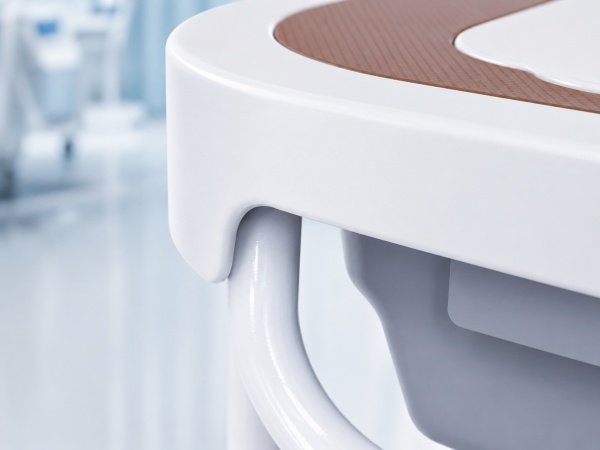
Identify seamless designs by looking for smooth, molded seats without stitched edges, fully enclosed wheel caster housings, and welded frame joints instead of deep bolts. A unified construction significantly reduces hidden crevices, preventing moisture and bacteria from accumulating in hard-to-reach areas during daily use.
Evaluating Seat and Backrest Construction
The seat is the highest-risk contact point on any commode. A truly seamless seat is molded from a single piece of material. There are no stitches, no staples, and no glued layers. When a caregiver sprays a hospital-grade disinfectant, the liquid should flow off easily. If the seat has decorative grooves or textured grips, those areas will collect residue. Smooth surfaces are mandatory for rapid turnaround times.
Pay close attention to the backrest design as well. Many standard models use fabric sling backs. While lightweight, fabric materials absorb sweat and odors. They also feature heavy stitching along the tension straps. A solid, wipeable backrest made from molded polyurethane eliminates this odor absorption entirely and drastically speeds up the wiping process.
Inspecting Joints and Hardware
Look closely at how the chair frame connects. Are there exposed screw threads? Deep bolt holes act like magnets for dirt and bodily fluids. Quality equipment uses welded joints or capped hardware to maintain a continuous, smooth surface. When we refine our prototypes, we actively reduce the number of exposed fasteners. Fewer fasteners mean fewer places for pathogens to hide.
| Feature | Hygiene Risk Level | Cleaning Effort Required |
|---|---|---|
| Seamless Molded Seat | Low | Minimal wipe-down |
| Stitched Vinyl Cushion | High | Difficult (prone to cracking) |
| Welded Frame Joints | Low | Quick surface spray |
| Exposed Bolt Threads | High | Requires manual brushing |
Casters and Moving Parts
Wheel assemblies often trap hair, dust, and contaminated mop water from bathroom floors. Fully enclosed caster housings prevent debris from tangling in the wheel axle. Open wheel forks require constant manual picking to keep them functioning smoothly. By prioritizing smooth, closed geometries across the entire chair, your facility can dramatically reduce the labor hours spent on deep cleaning.
Which components must be easily detachable to streamline my staff’s daily cleaning protocols?
Struggling with stuck parts slows down your busy nurses and causes unsanitary spills. We design our modular toilet aids so your staff can detach critical components effortlessly and safely.
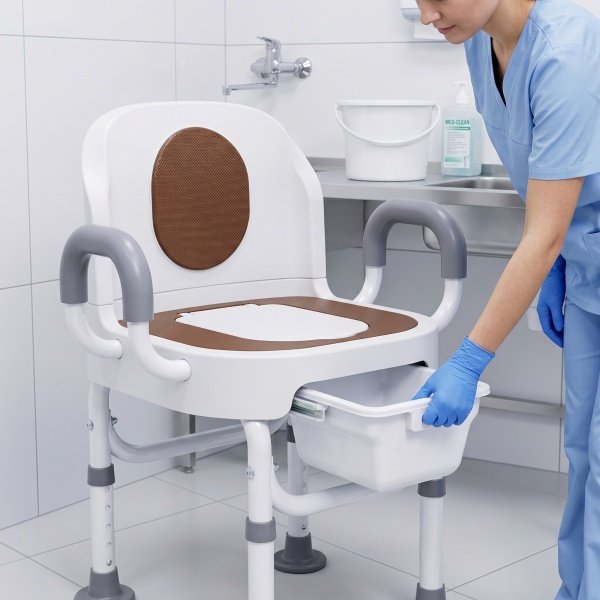
The commode bucket, seat, armrests, and splash guards must be easily detachable without requiring specialized tools. Quick-release mechanisms for these components allow staff to perform thorough independent cleaning, manage waste disposal safely, and eliminate hard-to-reach contamination zones around the main frame.
The Importance of the Bucket System
The waste bucket is the most frequently handled part of the chair. It must slide out smoothly from the front or rear without snagging on the metal frame. If a bucket requires awkward tilting to remove, your staff risks spilling hazardous waste on the floor. We highly recommend wide-mouthed buckets with secure lids. Additionally, compatibility with disposable commode liners is crucial. Liners eliminate direct contact with waste and reduce bucket scrubbing to almost zero.
Tool-Free Removable Seats and Armrests
Nurses do not have time to find screwdrivers during a busy shift. The seat and armrests should feature push-button or snap-on releases. When a patient experiences a severe incontinence episode, the staff must remove the seat entirely to sanitize the rails underneath. If the seat is permanently bolted down, caregivers can only wipe the top, leaving bacteria to fester underneath.
| Component | Detachment Method | Primary Benefit |
|---|---|---|
| Waste Bucket | Slide-out track | Prevents spills during transport |
| Commode Seat | Snap-on clips | Allows cleaning of the under-frame |
| Splash Guard | Drop-in fit | Directs waste accurately, easy rinse |
| Armrests | Push-button release | Provides side access for wiping |
Enhancing Operational Speed with Footrests
Do not forget the lower half of the chair. Swing-away footrests that detach completely are a massive advantage. When footrests are permanently fixed, staff must bend awkwardly to clean around the footplates, often missing the undersides where urine splashes frequently occur. Removable footrests solve this visibility and access problem instantly. Modular chairs allow one staff member to take contaminated parts to a sluice room while another wipes down the bare frame, keeping the patient area hygienic.
How do I evaluate if a mobile commode chair meets my hospital’s strict infection control standards?
Non-compliant equipment invites regulatory fines and puts vulnerable patients at immense risk. By testing our mobility products against clinical hygiene protocols, we guarantee alignment with severe hospital requirements.
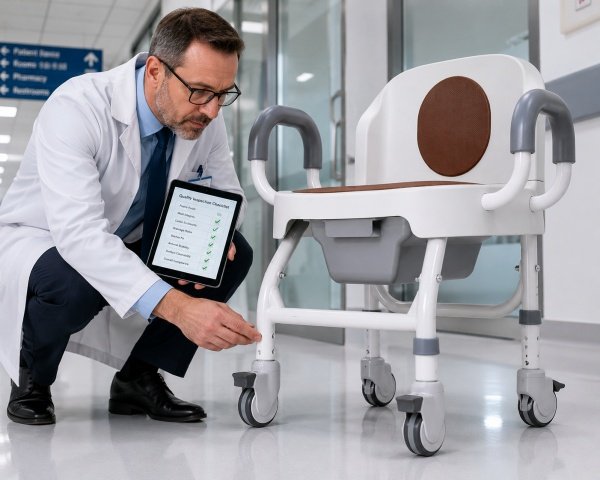
Evaluate compliance by checking the manufacturer’s cleaning guidelines for hospital-grade chemical compatibility, verifying the presence of antimicrobial surface treatments, and assessing the physical design for minimal residue traps. The equipment must support your facility’s specific sequence of cleaning followed by high-level disinfection.
Validating Manufacturer Specifications
Never guess about chemical compatibility. Your hospital’s infection control team relies on specific, regulated disinfectants. You must demand clear documentation from the supplier stating exactly which chemicals are safe to use on their products. If a supplier cannot provide a maintenance manual detailing approved cleaning agents, do not buy from them. Our engineering team routinely provides these compatibility charts to medical buyers to ensure safe, long-term use in clinical wards.
Antimicrobial Additives and Coatings
Modern clinical furniture often includes antimicrobial properties molded directly into the plastics or painted onto the metal frame. Antimicrobial Additives and Coatings 7 While this does not replace standard manual cleaning, it provides a crucial secondary line of defense. It actively inhibits the growth of bacteria and mold between scheduled washings. Look for products that explicitly advertise these specific material enhancements.
| Evaluation Area | What to Look For | Red Flag Warning |
|---|---|---|
| Chemical Safety | Clear manufacturer guidelines | No cleaning instructions provided |
| Surface Defense | Embedded antimicrobial agents | Highly textured or porous surfaces |
| Water Drainage | Escape holes in lower tubes | Sealed tubes that trap internal water |
Scenario-Based Workflow Testing
Do not just read the sales brochure. Evaluate the chair based on your actual floor workflows. Can the chair be pushed directly into a roll-in shower for a full-body wash down? Does the frame hold water inside the tubes after cleaning? A truly compliant chair has drainage holes in its tubular frame to prevent internal rusting and stagnant water buildup.
Finally, inspect the wheel caster brake pedals. Intricate locking mechanisms often feature exposed springs and narrow metal levers. These complex pedals trap floor mop strings, dust, and bathroom liquids. We always advise clinical buyers to select chairs with smooth, simple brake pedals that can be sprayed and wiped clean in one motion. Practical testing reveals the true hygiene value of medical equipment.
Conclusion
Evaluating cleaning ease is about protecting vulnerable patients and supporting overworked staff. Prioritize seamless designs, durable materials, and removable parts to maintain the highest hygiene standards in your medical facility.”
Footnotes
1. Official EPA source for information on registered disinfectants for healthcare settings. ↩︎
2. Provides comprehensive information on infection prevention and control to prevent outbreaks. ↩︎
3. Offers CDC guidelines and recommendations for high-level disinfection in healthcare facilities. ↩︎
4. Details the properties and medical applications of high-density polyethylene. ↩︎
5. Outlines essential infection prevention and control practices for all healthcare settings. ↩︎
6. Provides information on common healthcare-associated infections and the pathogens that cause them. ↩︎
7. Discusses the development and FDA compliance of antimicrobial coatings for medical applications. ↩︎