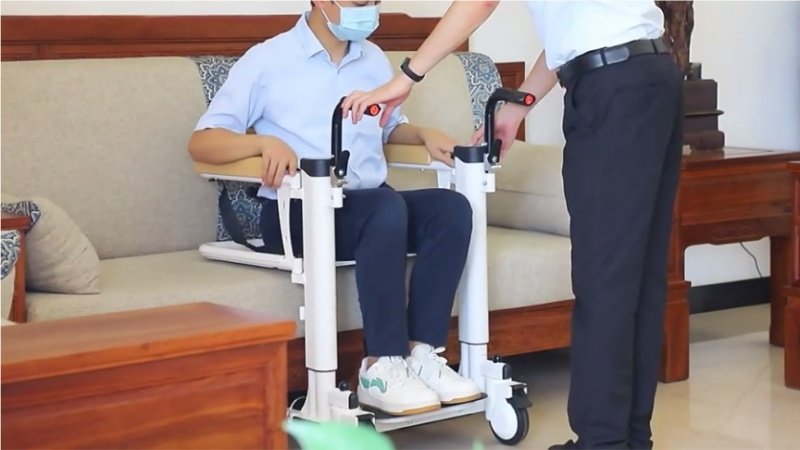

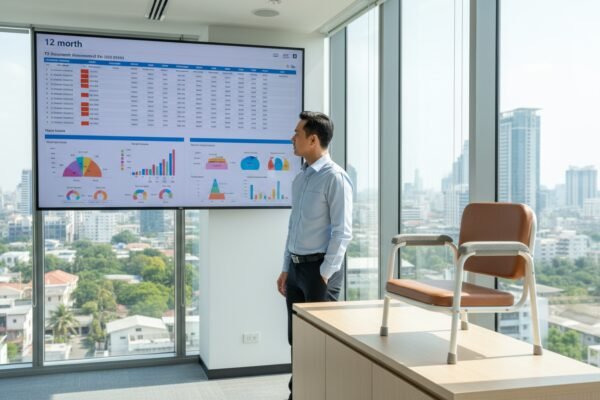
Every year, our production team fields dozens of inquiries from Thai distributors trying to lock down their commode chair orders before government tender seasons open.
Thai distributors develop annual procurement plans for mobile commode chairs by analyzing demographic demand, aligning with government tender cycles, selecting certified OEM partners, scheduling shipments around monsoon and fiscal deadlines, and budgeting for product customization needs.
Below, we break down the four core questions every Thai distributor should answer before finalizing their annual plan.
How can I accurately forecast the market demand for mobile commode chairs in Thailand this year?
When we review order histories from our Southeast Asian partners, we notice Thai demand follows patterns tied to fiscal calendars and seasonal health events.
To forecast accurately, combine Thailand's aging population data, historical sales by quarter, government healthcare budget announcements, and regional hospital expansion plans into a demand model that accounts for both institutional and home-care segments.

Why Demographics Matter Most
Thailand's population aged 60+ is growing rapidly. This single factor drives both institutional purchases (hospitals, nursing homes) and B2C home-care sales. Distributors should pull data from Thailand's National Statistical Office 1 each January.
Data Sources for Your Forecast
| Data Source | What It Tells You | Update Frequency |
|---|---|---|
| National Statistical Office | Aging population by province | Annual |
| NHSO budget announcements | Public hospital purchasing power | Annual (October fiscal year) |
| Historical sales (your own) | Seasonal peaks and growth rate | Quarterly |
| Hospital expansion plans | New facility openings needing equipment | Varies |
| E-commerce platform trends | B2C home-care demand shifts | Monthly |
Seasonal Demand Patterns
From our export records, Q1 and Q3 tend to spike. Q1 aligns with Thailand's new fiscal year budgets releasing. Q3 coincides with monsoon season, when mobility challenges increase for elderly populations. Build 15–20% buffer stock for these periods.
Institutional vs. Home-Care Split
Most Thai distributors report roughly 60% institutional and 40% home-care demand. However, the home-care segment is growing faster—around 12–15% annually—driven by e-commerce adoption and the expanding "Thai Help Thai" mobile vendor network. Plan procurement volume accordingly.
Regional differences also matter. Bangkok and Chiang Mai have higher institutional density. Rural provinces in Isan show stronger home-care demand through mobile vendor channels. Split your forecast by region to avoid overstocking in one warehouse while another runs dry.
What criteria should I use to select a reliable OEM partner for my bulk commode chair orders?
Our engineers spend considerable time helping Thai buyers verify that specifications match both WHO guidelines and local market preferences before any bulk order goes into production.
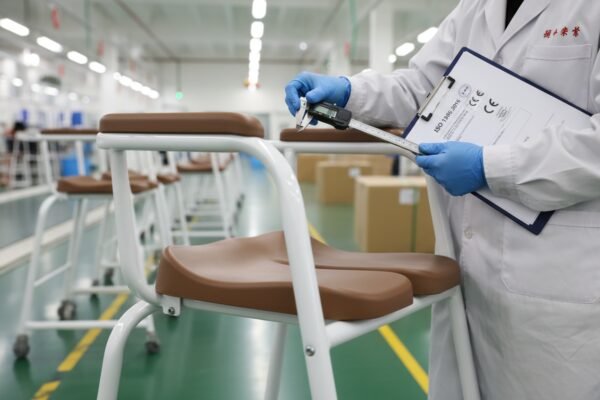
Select an OEM partner based on certified quality systems (ISO 13485, CE), production capacity for your volume needs, customization flexibility, delivery reliability track record, and willingness to support Thai regulatory documentation requirements.
The Non-Negotiable Certifications
Thai government tenders often require products with ISO, CE, or FDA certifications. CE certifications 3 Without these, your product cannot enter institutional channels. Verify certificates directly—not just copies from the supplier.
Key Evaluation Criteria
| Criterion | Why It Matters | How to Verify |
|---|---|---|
| ISO 13485 certification 4 | Medical device quality management | Request certificate; check issuing body |
| Production capacity | Can they fill your annual volume? | Factory visit or video audit |
| Defect rate | Impacts your returns and reputation | Ask for QC reports from last 12 months |
| Lead time reliability | Late shipments = lost tenders | Check references from other buyers |
| MOQ flexibility | Allows you to test new models | Negotiate during initial discussions |
| Customization capability | Logo, color, packaging, features | Request samples with your specs |
Red Flags to Watch
Suppliers who refuse factory audits, cannot provide reference clients, or quote lead times that seem too short for your volume are risky. In our experience shipping to Thai distributors, realistic lead times for 500–2,000 units are 30–45 days from order confirmation.
Building a Long-Term Partnership
The best procurement plans come from stable supplier relationships. We recommend placing a trial order of 100–200 units first. Evaluate the product quality, communication responsiveness, and shipping accuracy. Then commit to annual framework agreements 5 that lock in pricing and priority production slots.
A framework agreement typically includes: agreed unit prices for the year, monthly or quarterly delivery schedules, quality penalty clauses, and customization specifications. This gives both parties certainty and reduces procurement stress.
How do I coordinate shipping timelines with my Chinese supplier to ensure consistent stock availability?
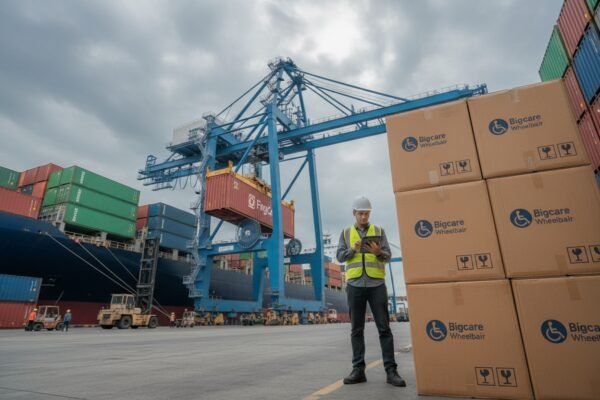
On our side, we manage container bookings from Foshan to Laem Chabang port regularly, and the biggest lesson we have learned is that planning backward from your need-by date is the only way to avoid stockouts.
Coordinate by mapping your annual sales calendar backward through customs clearance (5–7 days), sea freight (5–12 days from South China), production time (30–45 days), and order confirmation—then add a 2-week buffer for unexpected delays.
The Backward Planning Method
Start with the date you need stock in your Thai warehouse. Subtract each stage:
| Stage | Typical Duration | Notes |
|---|---|---|
| Thai customs clearance | 5–7 days | Longer if documentation incomplete |
| Sea freight 6 (Foshan → Laem Chabang) | 5–8 days | Direct sailing; add days for transshipment |
| Port loading and documentation | 3–5 days | Bill of lading, inspection |
| Production | 30–45 days | Depends on volume and customization |
| Order confirmation and deposit | 3–7 days | Wire transfer processing time |
| Buffer | 14 days | For Chinese holidays, port congestion |
| Total lead time | 60–90 days | Plan orders 3 months ahead |
Aligning with Thai Fiscal and Tender Cycles
Thailand's government fiscal year starts October 1. Budget releases often trigger institutional orders in Q1 (October–December). If you need stock ready by October, your order must be placed with your Chinese supplier no later than mid-July.
Staggered Shipping Strategy
Rather than one massive annual shipment, split into quarterly or even bi-monthly containers. This approach reduces warehouse costs, improves cash flow, and lets you adjust quantities based on real-time demand signals.
We recommend this rhythm for a mid-size Thai distributor ordering 2,000 units annually:
- July: 600 units (for October fiscal year rush)
- October: 500 units (for Q2 January–March)
- January: 500 units (for Q3 monsoon season prep)
- April: 400 units (for Q4 and buffer)
Communication Protocols
Establish a weekly update rhythm with your supplier during production. Use WhatsApp or WeChat for quick responses. Request production photos at key stages: frame welding, seat assembly, final QC, and packing. This catches problems early and avoids surprise delays.
How can I integrate product customization requirements into my annual procurement budget?
When we quote customized commode chairs 7—different seat widths, branded packaging, or specific color schemes—the cost structure changes in ways that Thai buyers sometimes underestimate during initial budgeting.
Integrate customization costs by identifying requirements early, requesting itemized quotes for tooling, materials, and packaging changes, then spreading one-time setup costs across your full annual volume to calculate true per-unit landed cost.

Types of Customization and Their Cost Impact
Not all customization costs the same. Simple changes like logo printing add minimal cost. Structural changes like new seat dimensions require tooling investment.
| Customization Type | One-Time Cost | Per-Unit Cost Impact | Lead Time Impact |
|---|---|---|---|
| Logo printing/sticker | $0–$200 | +$0.50–$1.00 | None |
| Custom packaging/box | $300–$800 | +$1.50–$3.00 | +5 days |
| Color change (frame) | $0–$500 | +$2.00–$4.00 | +3–5 days |
| Seat width/height adjustment | $1,000–$3,000 | +$3.00–$8.00 | +7–14 days |
| New mold (structural change) | $5,000–$15,000 | Amortized over volume | +30–60 days |
Budgeting Strategy
Take your total annual volume and divide one-time costs across all units. For example, a $3,000 tooling cost spread across 2,000 units adds only $1.50 per chair. This makes customization affordable when you commit to volume.
What Thai Market Demands
From our conversations with Thai distributors, the most common customization requests are:
- Wider seats (Thai market prefers 18–20 inch over standard 16 inch)
- Rust-resistant coating for humid climates
- Thai-language user manuals and warning labels
- Neutral color schemes (white, grey, brown) matching bathroom aesthetics
- Removable armrests for easier patient transfer
Timing Customization Decisions
Lock all customization specs before your first quarterly order. Mid-year changes cause production delays and potential material waste. We advise Thai partners to finalize all specs by May for their July production start. This gives our team time to source specific materials and prepare production tooling.
Include a 5–8% customization contingency in your annual budget. Unexpected requirements from new tender specifications or customer feedback may arise mid-year. Having budget flexibility prevents delays when opportunities appear.
Conclusion
A strong annual procurement plan combines accurate demand forecasting, a certified OEM partner, disciplined shipping coordination, and smart customization budgeting—all aligned to Thailand's unique market rhythms.
Footnotes
1. Official website for Thailand’s primary statistical agency. ↩︎
2. HTTP 404 ↩︎
3. Official European Commission information on CE marking requirements. ↩︎
4. Explains the international standard for medical device quality management systems. ↩︎
5. Explains the concept of long-term contractual arrangements in business. ↩︎
6. Defines maritime transport, a key method for international goods movement. ↩︎
7. Details the process of tailoring products to individual customer preferences. ↩︎