
Every week on our production floor in Foshan, we pack electric wheelchairs headed to ports across China, and buyers constantly ask us the same thing: which shipping term actually saves money?
To compare FOB and CIF prices for electric wheelchairs, you must convert both quotes into a total landed cost at your destination. FOB shows only the product cost at the origin port, while CIF bundles freight and basic insurance. Neither number alone reveals your true import cost or protects your profit margin.
A lower invoice number can fool you. The real question is not which quote looks cheaper on paper UN38.3 test reports 1. It is which quote gives you the lowest total cost once the wheelchair reaches your warehouse, with acceptable risk and compliance along the way. Let me walk you through exactly how to do that comparison.
What specific costs are included in my FOB vs CIF quotes for electric wheelchairs?
When we prepare quotations for overseas distributors, we notice many buyers compare FOB and CIF numbers side by side without understanding what each number actually contains Material Safety Data Sheets 2.
An FOB quote for electric wheelchairs covers the product cost, inland transport to the Chinese port, export customs clearance, and loading onto the vessel. A CIF quote adds ocean freight and minimum cargo insurance to the same base, delivering the price to your named destination port. Neither quote includes import duties, destination charges, or last-mile delivery.
Breaking Down the FOB Price Stack
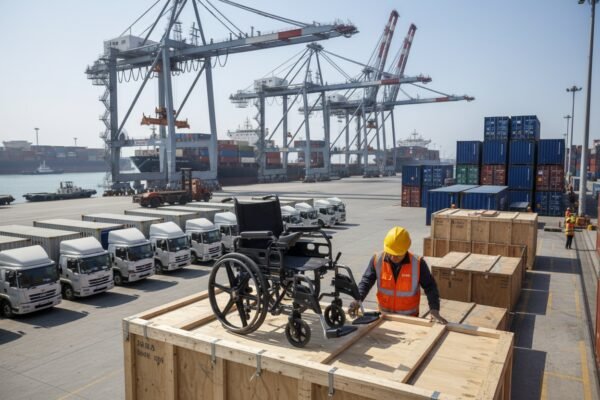
FOB stands for Free On Board 3. When we quote FOB Nansha or FOB Shenzhen for a batch of electric wheelchairs, the price you see includes these elements: the manufacturing cost of the wheelchair, quality inspection, export-standard packaging, inland trucking from our Foshan facility to the departure port, export customs declaration, and loading the goods onto the vessel. Once the wheelchairs cross the ship's rail, your responsibility begins.
That means you, the buyer, must arrange and pay for ocean freight 4, cargo insurance, destination port handling, customs clearance in your country, import duties, and onward delivery to your warehouse.
Breaking Down the CIF Price Stack
CIF stands for Cost, Insurance, and Freight 5. When we quote CIF Rotterdam or CIF Los Angeles, we add two things on top of the FOB price: the main ocean freight charge and a basic marine cargo insurance policy. Under Incoterms 2020 6, that insurance only needs to cover 110% of the invoice value at the minimum coverage level, which is Institute Cargo Clauses C 7. That level may not cover all risks you care about for expensive powered wheelchairs.
Here is a critical point many buyers miss: under CIF, the risk still transfers to the buyer when the goods are loaded onto the vessel at the origin port. The seller pays for freight and insurance, but the buyer bears the transit risk from that loading moment onward.
Side-by-Side Cost Responsibility Table
| Cost Element | FOB | CIF |
|---|---|---|
| Manufacturing cost | Seller | Seller |
| Inland transport to origin port | Seller | Seller |
| Export customs clearance | Seller | Seller |
| Loading onto vessel | Seller | Seller |
| Ocean freight | Buyer | Seller |
| Cargo insurance (basic) | Buyer | Seller |
| Destination port charges | Buyer | Buyer |
| Import duties and taxes | Buyer | Buyer |
| Customs brokerage at destination | Buyer | Buyer |
| Last-mile delivery to warehouse | Buyer | Buyer |
Why Electric Wheelchairs Are Different
Electric wheelchairs are not like standard consumer goods. They are bulky, heavy, and contain batteries. Lithium-ion batteries 8 require UN38.3 test reports, Material Safety Data Sheets, special packaging, and carrier acceptance checks. Some shipping lines charge battery surcharges. Sealed lead-acid battery models have a different compliance profile but are heavier, which affects volumetric weight calculations.
When we quote CIF, we include the battery-related surcharges we know about at the origin side. But destination-side fees, demurrage, and any extra inspections triggered by the battery classification are still on the buyer. This is why you cannot simply compare two invoice numbers and call it a decision.
How do I calculate the total landed cost to ensure my profit margins are protected?
On our side, we see buyers who focus only on the per-unit price and then get surprised by unexpected fees that eat into their margins after the shipment arrives.
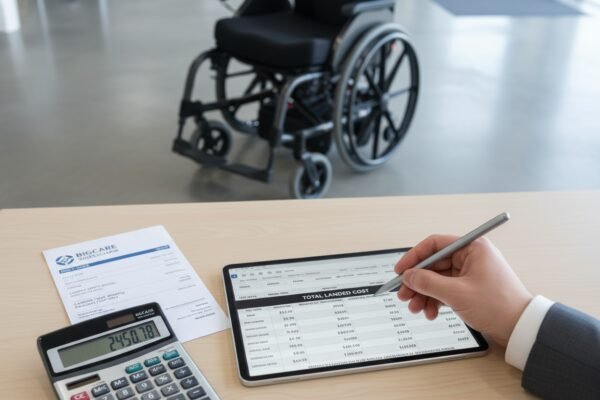
To calculate total landed cost for electric wheelchairs, add together the supplier quote, any freight and insurance you arrange, destination port charges, customs duties, VAT or GST, brokerage fees, battery compliance costs, and last-mile delivery. Compare this total for both FOB and CIF scenarios using the same destination and service assumptions.
The Landed Cost Formula
The formula is straightforward. Start with the supplier price. Then add every cost that occurs between your supplier's responsibility endpoint and the moment the wheelchairs sit in your warehouse, ready to sell.
Here is the step-by-step approach:
- Supplier quote — FOB or CIF price per unit.
- Ocean freight — If FOB, you arrange this. If CIF, it is included.
- Cargo insurance — If FOB, you buy it. If CIF, basic coverage is included but may be insufficient.
- Destination port handling — Terminal handling charges, container unloading, and port storage fees.
- Customs brokerage — The fee your customs broker charges to clear the goods.
- Import duties — Based on the HS code 9 for electric wheelchairs in your country.
- VAT, GST, or import tax — Applied on the CIF value plus duty in most countries.
- Battery compliance costs — Any additional inspection, documentation, or handling fees at destination.
- Last-mile delivery — Trucking from the port to your warehouse.
Worked Example: 100 Electric Wheelchairs to the UK
Let me show you a simplified comparison. These numbers use realistic ranges, not exact rates, because freight and duties fluctuate.
| Cost Element | FOB Scenario | CIF Scenario |
|---|---|---|
| Supplier price per unit | $620 FOB Nansha | $720 CIF Felixstowe |
| Ocean freight (per unit) | $85 (buyer-arranged) | Included in CIF |
| Cargo insurance (per unit) | $12 (buyer-arranged, full coverage) | Included (basic coverage) |
| Destination port handling (per unit) | $18 | $18 |
| Customs brokerage (per unit) | $5 | $5 |
| Import duty (0% for wheelchairs in many countries) | $0 | $0 |
| VAT at 0% (UK VAT relief for mobility aids) | $0 | $0 |
| Battery handling surcharge (per unit) | $8 | $8 |
| Last-mile trucking (per unit) | $15 | $15 |
| Total Landed Cost Per Unit | $763 | $766 |
In this example, the FOB route is slightly cheaper because the buyer negotiated a competitive freight rate and chose a comprehensive insurance policy. The CIF route is close but includes a markup on freight and only offers minimum insurance.
Why Margins Depend on These Details
Notice that import duty for electric wheelchairs is 0% in many countries, including the UK and parts of the EU, because they are classified as mobility aids. But this is not universal. In other markets, duties could range from 0% to 6% or higher depending on classification. If your country treats a powered wheelchair as a "motor vehicle" or "consumer electronic," the duty changes significantly. Always confirm the HS code with your customs broker before calculating margins.
Also note that VAT relief may apply for medical mobility equipment in some jurisdictions. This can be a major margin advantage, but only if you file the correct documentation. Our team regularly helps buyers prepare the right export paperwork to support duty and tax claims at destination.
Insurance Quality Matters
Under CIF, the seller only needs to provide Institute Cargo Clauses C coverage, which is the most basic level. It covers major casualties like fire, sinking, or collision but does not cover theft, water damage from rough seas, or mishandling. For electric wheelchairs worth $600 to $2,000 each, you may want Clauses A coverage, which is all-risk. If you choose FOB, you can buy that better coverage yourself. If you choose CIF, you may need to buy supplemental insurance on top of what the seller provides.
Which shipping term offers me better control over my delivery timeline and logistics?
When we ship containers from Nansha or Shenzhen ports, we handle dozens of bookings each month, and we have watched buyers struggle with delays they could have avoided by choosing the right Incoterm for their situation.
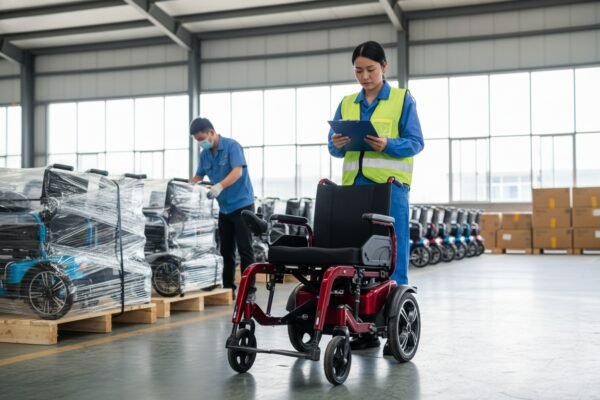
FOB gives the buyer direct control over carrier selection, shipping schedules, and routing, which often leads to faster and more predictable delivery timelines. CIF transfers logistics coordination to the seller, which simplifies the process but limits your ability to choose faster routes, preferred carriers, or consolidated shipments.
Control Under FOB
When you buy FOB, you pick the freight forwarder. You pick the shipping line. You decide whether to use a direct service or a transshipment route. You can consolidate multiple supplier shipments into one container. You can choose a faster vessel if you need the wheelchairs urgently.
This control is especially valuable for battery-powered products. Not every carrier accepts lithium-ion battery shipments on every route. If you work with a freight forwarder who specializes in dangerous goods logistics, you can avoid last-minute rejections or rerouting. Under CIF, you are at the mercy of whichever carrier the seller books, and some sellers default to the cheapest, slowest option.
Control Under CIF
CIF is simpler. The seller books the freight, arranges the insurance, and tells you the estimated arrival date. For a buyer placing a first order or a smaller buyer without a logistics team, this convenience is real. You do not need to manage carrier bookings, track vessel schedules, or negotiate with freight forwarders.
But you also lose visibility. If the seller books a vessel with two transshipments to save money, your delivery could take three to four weeks longer than a direct service. You may not know until the bill of lading arrives. And if port congestion delays the vessel, you have limited ability to intervene because the freight contract is between the seller and the carrier, not between you and the carrier.
Timeline Comparison for a Typical Order
| Timeline Factor | FOB (Buyer Controls) | CIF (Seller Controls) |
|---|---|---|
| Carrier selection | Buyer chooses preferred line | Seller chooses, often cheapest |
| Route optimization | Buyer can select direct routes | Seller may use transshipments |
| Vessel schedule visibility | Full visibility via buyer's forwarder | Limited until documents are issued |
| Consolidation with other orders | Buyer can consolidate freely | Not possible unless same seller |
| Ability to expedite | Buyer can upgrade service | Buyer must request seller to change |
| Estimated ocean transit (China to EU) | 20–30 days (direct) | 25–40 days (may include transshipment) |
The 2025 Freight Market Reality
Ocean freight rates in 2025 remain volatile. Capacity constraints, rerouting around geopolitical hotspots, and seasonal demand swings can cause rate changes within weeks. Under FOB, you can time your bookings or lock in rates with your forwarder when the market dips. Under CIF, the seller quotes based on the rate at the time of quotation. If rates drop before shipment, you still pay the original CIF price. If rates spike, the seller may ask to renegotiate.
For regular importers placing multiple orders per year, FOB typically offers better long-term freight cost management. For one-off or annual orders, CIF can lock in a predictable total cost and remove the freight timing gamble.
Battery Shipment Routing Challenges
Electric wheelchairs with lithium-ion batteries face carrier restrictions on certain routes. Some shipping lines limit battery cargo on specific vessels or require advance booking slots for dangerous goods containers. Under FOB, your forwarder can proactively secure these slots. Under CIF, you depend on the seller's logistics team to handle this, and delays from carrier rejections can push your delivery out by weeks.
We always recommend that buyers confirm battery type, UN classification, and carrier acceptance before finalizing the Incoterm. Our export team provides the full battery documentation package regardless of whether the order is FOB or CIF, but the logistics coordination responsibility differs significantly between the two.
What are the hidden risks I should consider when choosing between FOB and CIF for my medical equipment?
Over the years of exporting powered wheelchairs from our Foshan facility, we have seen orders go smoothly and others encounter costly surprises that could have been prevented with better upfront planning.
Hidden risks when choosing between FOB and CIF for electric wheelchairs include inadequate CIF insurance coverage, undisclosed freight markups, battery compliance rejections at destination, demurrage and detention charges, documentation gaps for medical device imports, and the buyer's inability to file insurance claims directly under seller-arranged CIF policies.

Risk 1: Inadequate Insurance Under CIF
This is the most common hidden risk. CIF insurance at the minimum level does not cover theft, rough handling, or water ingress that is not caused by a major maritime event. Electric wheelchairs are sensitive medical products. A controller board damaged by humidity, a battery pack punctured during handling, or a frame bent by poor stacking can all be excluded under Clauses C. If you buy CIF, ask the seller exactly what insurance level they provide. If it is only Clauses C, consider buying your own supplemental all-risk policy.
There is another problem. Under CIF, the insurance policy is in the seller's name. If a claim arises, the buyer may need the seller's cooperation to file it. This can be slow, especially across time zones and languages. Under FOB, you buy your own policy, you control the claim process, and you deal directly with your insurer.
Risk 2: Freight Markups You Cannot See
When a seller quotes CIF, the freight cost is embedded in the price. You do not see a line item for freight or insurance. Some sellers add a margin on the freight component, which is understandable since they are providing a service. But that margin can be significant, especially for bulky items like wheelchairs. We have seen cases where the freight portion of a CIF quote was 20% to 30% higher than what the buyer could have arranged independently.
Ask the seller for a breakdown. Many reputable suppliers will show you the FOB price and the freight and insurance add-on separately, even within a CIF quote. If a seller refuses to break down the CIF price, that is a signal to investigate further.
Risk 3: Battery Compliance Failures
Electric wheelchairs with lithium-ion batteries must comply with IMDG Code for ocean freight. The batteries need UN38.3 certification, proper MSDS documentation, and correct outer packaging markings. If any of this is missing or incorrect, the shipment can be rejected at the origin port, delayed at transshipment, or held at the destination.
Under CIF, the seller arranges the freight booking, so they are responsible for presenting compliant documentation to the carrier. But if the documentation is incomplete and the shipment is delayed, the buyer still suffers the commercial consequences: missed sales, unhappy customers, and potential demurrage charges at the destination port.
Under FOB, the buyer's freight forwarder can verify documentation before booking. This adds a layer of checking that can catch problems early.
Risk 4: Destination Charges and Demurrage
Neither FOB nor CIF covers destination port charges, and these can add up quickly. Terminal handling charges, container scanning fees, port storage if you do not collect promptly, and chassis rental fees are all buyer costs under both terms.
Demurrage, which is the charge for keeping a container at the port beyond the free days, and detention, which is the charge for keeping the container outside the port beyond the allowed period, are particularly dangerous for first-time importers. If your customs clearance is slow because of missing documentation or a medical device inspection, these daily charges accumulate fast.
Risk 5: Medical Device Import Regulations
In many countries, electric wheelchairs are classified as medical devices or mobility aids. This classification can trigger additional import requirements: registration, conformity certificates, labeling standards, and post-market surveillance obligations. These requirements exist regardless of whether you use FOB or CIF, but they are easier to manage when you control the logistics chain.
Under FOB, your customs broker and freight forwarder can prepare for these requirements in advance. Under CIF, you may receive documents from the seller that do not match your country's specific regulatory format, creating clearance delays.
Quick Risk Comparison
| Risk Factor | FOB Exposure | CIF Exposure |
|---|---|---|
| Insurance quality | Buyer controls — can choose all-risk | Seller provides minimum — gaps likely |
| Freight cost transparency | Full visibility | Hidden markup possible |
| Battery documentation errors | Buyer's forwarder checks before booking | Seller manages — buyer cannot verify easily |
| Demurrage and detention | Same exposure | Same exposure |
| Claim filing process | Buyer files directly | May need seller cooperation |
| Medical device documentation alignment | Buyer coordinates with broker | Seller may not match destination requirements |
Our Recommendation
For experienced importers buying electric wheelchairs in volume, FOB usually provides better risk management. You control insurance, verify documentation, and avoid hidden costs. For smaller or first-time buyers, CIF can reduce coordination burden, but you must ask the right questions upfront: What insurance level is included? Can I see the freight breakdown? Do you provide full battery compliance documentation? Will you assist with destination-side claims?
We support both terms from our Foshan facility and provide full export documentation packages either way. The choice depends on your logistics capability, order volume, and risk tolerance.
Conclusion
The best comparison is not FOB price versus CIF price alone. It is which quote gives you the lowest total landed cost at an acceptable level of risk, compliance effort, and operational control for your electric wheelchair business.
Footnotes
1. Explains the UN38.3 certification process for safe lithium battery transport. ↩︎
2. Authoritative information on Material Safety Data Sheets (MSDS) and their requirements. ↩︎
3. Explains the Free On Board (FOB) Incoterm and associated responsibilities. ↩︎
4. Explains the concept of ocean freight in global supply chain logistics. ↩︎
5. Defines the Cost, Insurance, and Freight (CIF) Incoterm and its elements. ↩︎
6. Official source for Incoterms 2020 rules, defining international trade terms. ↩︎
7. Details the coverage provided by Institute Cargo Clauses C for marine insurance. ↩︎
8. Replaced HTTP 404 with the current, authoritative IATA page on Battery Shipping Regulations, which covers lithium-ion batteries. ↩︎
9. Official government resource defining Harmonized System (HS) codes for trade classification. ↩︎
10. Defines total landed cost and its key components in supply chain. ↩︎