
You face strict European regulations, and compliance failures ruin your margins. In our production lines, we have seen how clear technical communication prevents costly certification rejections.
To communicate European electric wheelchair requirements to Chinese suppliers, you must provide clear technical files detailing EU Medical Device Regulation standards, specify EN 12184 testing parameters, demand ISO 13485 compliance, and establish strict post-market surveillance protocols during contract negotiations.

Let us explore the exact steps to ensure your factory perfectly aligns with European market standards.
How do I ensure my Chinese supplier understands the specific MDR and CE certification requirements for my electric wheelchairs?
Vague regulatory instructions lead to severe customs delays. When our engineers calibrate electronics for EU clients, we rely on precise medical classifications rather than general safety assumptions.
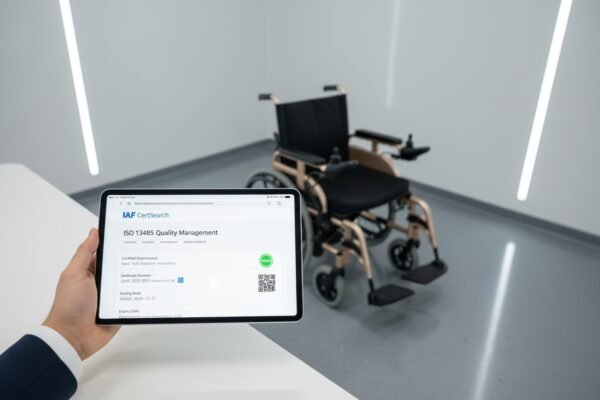
You ensure a Chinese supplier understands specific MDR and CE requirements by requesting their ISO 13485 certificate, validating it through IAF CertSearch, explicitly linking product features to MDR criteria, and jointly reviewing clinical evaluation procedures.
The European Medical Device Regulation (EU) 2017/745 1 sets strict rules for electric wheelchairs. This framework replaces the older Medical Device Directive (MDD). The new rules require much more than basic safety checks. You must verify that your supplier understands these advanced obligations.
Identifying Medical Device Classes
Electric wheelchairs are medical devices under EU law. Some models fall under Class I, which represents a lower risk. Other models with complex electronics fall into Class IIa. Class IIa devices require a Notified Body to assess them. You cannot rely on a simple self-certification process for these models. Your supplier must know exactly which class applies to your specific wheelchair design.
| Regulatory Framework | Primary Focus | Third-Party Assessment |
|---|---|---|
| Old Directive (MDD) | Basic safety and health | Often self-certified |
| New Regulation (MDR) | Clinical safety and data tracking | Required for Class IIa |
Verifying Quality Management Systems
Your supplier needs a strong quality management system. ISO 13485 2 is the gold standard for this industry. This certificate proves the factory can manage product risks. You should always verify this certificate using official databases like IAF CertSearch 3. A valid certificate shows the factory understands structured quality control.
Implementing Clinical Evaluations
MDR compliance introduces mandatory clinical evaluation. You need evidence that the wheelchair performs safely in real-world conditions. This process involves gathering clinical data and analyzing residual risks. Your factory partner must help you compile this data. You should discuss these data collection methods early in the partnership. Furthermore, you must register every device with a Unique Device Identification (UDI) 4. This UDI allows regulators to track the wheelchair throughout its entire lifecycle. Clear communication about UDI placement on the frame ensures smooth market entry.
What technical documentation should I provide to make sure my wheelchairs meet European EN 12184 safety standards?
Missing test parameters guarantee failed inspections. We build our power chair prototypes using exact laboratory conditions, knowing that assumptions about speed or load capacity inevitably cause redesigns.
To make sure wheelchairs meet EN 12184 standards, you should provide technical documents including a risk assessment report conforming to EN ISO 14971, detailed braking system schematics, battery circuit protection diagrams, and precise environmental adaptability testing criteria.
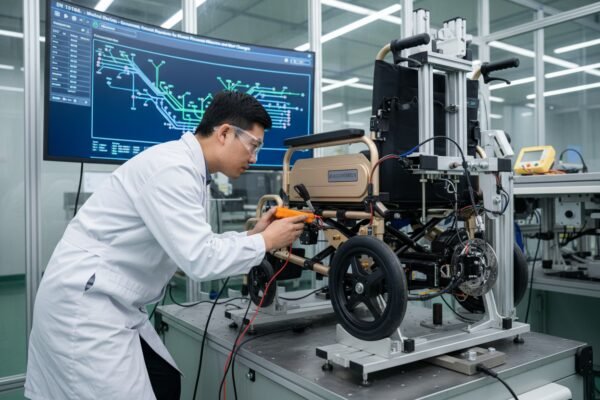
The EN 12184 standard 5 is mandatory for CE certification in Europe. It applies to electric wheelchairs with speeds up to 15 km/h and loads up to 300 kg. You must provide specific testing guidelines to your supplier to meet this standard.
Detailed Braking System Requirements
The braking system demands exact technical focus. EN 12184 requires the drive system to work even when the battery fails. The wheelchair must remain safe and operable in flywheel mode. You must provide clear instructions on how to test the brake levers. The standard prescribes exact points for applying testing force. Brake components cannot deform under pressure. If the parking brake wears down, your documentation must show the factory how to adjust or replace it.
Electrical and Battery Safety Documents
Electrical safety requires several detailed documents. You need to provide testing protocols for battery overcharge and over-discharge mechanisms. The Low Voltage Directive (LVD) and the Electromagnetic Compatibility Directive (EMC) also apply here.
| Safety Standard | Component Focus | Key Testing Requirement |
|---|---|---|
| EN 12184 | Frame and Brakes | Flywheel mode operation |
| LVD 2014/35/EU | Electrical Systems | Voltage protection |
| EMC 2014/30/EU | Control Modules | Interference prevention |
If your wheelchair uses lithium batteries, you must include UN38.3 transport safety documents. The EU has specific rules for battery thermal stability and safe disposal. Your factory must source batteries that already meet these EU rules.
Preparing the Complete Technical File
A complete technical file is necessary for European customs. This file must include a formal risk assessment report following EN ISO 14971 6. You must identify all potential hazards. Provide design drawings and functional descriptions to the factory. You also need test reports from accredited laboratories covering the EN 60601 electrical safety series. Finally, draft a Declaration of Conformity to confirm the product meets all stated requirements.
How can I effectively communicate my quality control expectations to a Chinese factory to avoid compliance issues?
Misaligned quality standards create unacceptable defect rates. During our daily assembly inspections, we use visual guides and exact metric tolerances because verbal instructions leave room for error.
You can effectively communicate quality control expectations to a Chinese factory by establishing quantitative performance metrics, implementing structured post-market surveillance plans, detailing software cybersecurity rules, and embedding these measurable standards directly into your manufacturing contracts.
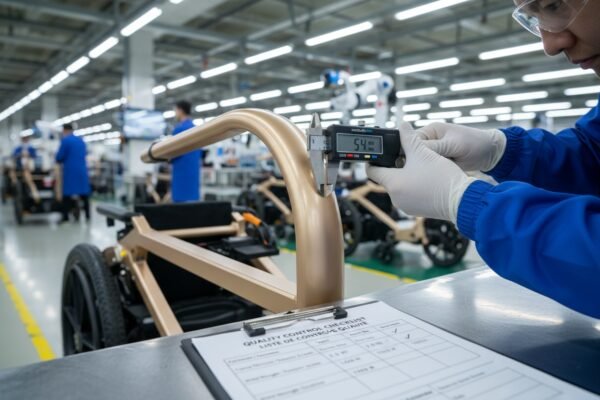
Good communication requires structured, documented quality control plans. You cannot rely on vague terms like "high quality" or "good performance." You must turn your expectations into measurable numbers and exact rules.
Establishing Quantitative Quality Metrics
Provide specific acceptance criteria for every component. Instead of asking for a strong frame, specify the exact load weight and testing duration. Create visual inspection manuals with clear photos. Show acceptable welds next to unacceptable welds. This visual approach removes language barriers on the factory floor. Contractual language must protect both parties. Reference the exact EU standards in your purchasing agreements. Detail the penalties for using unapproved substitute materials.
Managing Software and Cybersecurity
Modern electric wheelchairs integrate digital components and smart controllers. You must address software safety directly. Suppliers need to understand the IEC 81001-5-1 standard for health software safety. If the wheelchair has a mobile app or Bluetooth connection, the factory must secure it against cyber threats. Communicate these digital security needs as strictly as you communicate physical safety needs.
| Quality Domain | Common Vague Request | Correct Quantitative Metric |
|---|---|---|
| Welds | Make the frame strong | Withstand 300kg load for 48 hours |
| Software | Ensure the app is safe | Comply with IEC 81001-5-1 security |
| Electronics | Keep wiring secure | Pass EMC 2014/30/EU interference test |
Post-Market Surveillance Obligations
Quality control does not end when the product ships. EU MDR mandates strict Post-Market Surveillance (PMS) 7. You must monitor the wheelchair's performance in the real world. Engage your Chinese supplier early in this process. Outline their exact responsibilities for data collection. If a component fails in Europe, the factory must help analyze the root cause. Explain that tracking incident reports and spotting trends is a shared legal requirement.
What steps should I take to bridge the communication gap when discussing complex European regulatory updates with my manufacturer?
Evolving compliance rules often get lost in translation. We update our testing protocols through bilingual documentation to ensure every production worker grasps the latest safety updates immediately.
You bridge the communication gap regarding European regulatory updates by utilizing technical translators with medical device expertise, scheduling regular video training sessions, maintaining shared bilingual compliance trackers, and visually mapping out new standard requirements.
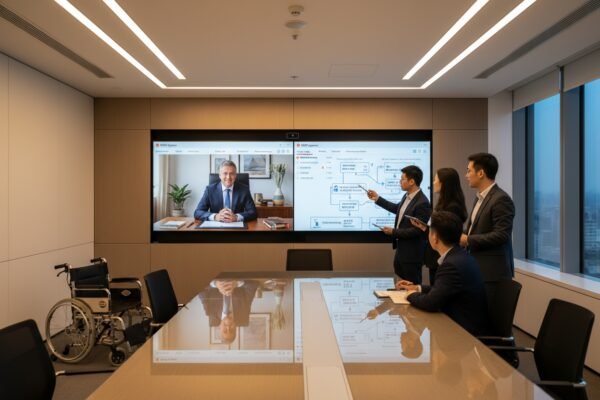
The regulatory landscape changes frequently. Keeping your supplier updated requires an active, organized approach. Standard emails are not enough to explain complex legal updates to a factory engineering team.
Overcoming Language Barriers
Technical standards contain very specific terminology. Direct translation software often makes dangerous mistakes. You should work with translators who have specific medical device expertise. They ensure critical safety requirements remain accurate in Chinese. Furthermore, schedule regular video conferences. Video calls let you share screens and point directly to technical drawings. This visual interaction clears up confusion much faster than text messages. Consider hiring a local quality representative to visit the factory and explain updates in person.
Adopting Sustainable Manufacturing Practices
Europe places a growing emphasis on environmental responsibility. You must discuss Life Cycle Assessment (LCA) and eco-design with your supplier. Explain the EU goals for material sourcing and recyclability. The factory needs to understand that sustainable practices will soon become strict market requirements. Frame these updates not as obstacles, but as essential steps for future business growth.
| Communication Method | Best Use Case | Frequency |
|---|---|---|
| Bilingual Trackers | Daily component specifications | Continuous |
| Video Training | Explaining new MDR updates | Quarterly |
| On-site Audits | Verifying eco-design practices | Annually |
Building a Continuous Feedback Loop
Establish a system for ongoing dialogue about regulations. Create a shared cloud folder containing all current standards. When a standard updates, highlight the exact changes in a summary document. Ask the factory engineers to confirm they understand the changes. A supplier who invests time to learn European rules becomes a highly valuable partner. Rewarding their compliance efforts builds a long-term, profitable business relationship.
Conclusion
Clear communication of European standards secures your supply chain. By defining technical parameters and maintaining active dialogue, you guarantee consistent delivery of compliant, high-quality electric wheelchairs.
Footnotes
1. Official text of the EU Medical Device Regulation. ↩︎
2. Replaced HTTP 403 with official ISO standard page. ↩︎
3. Official global database for verifying accredited management system certifications. ↩︎
4. Information on the EU’s Unique Device Identification system for medical devices. ↩︎
5. Specifies requirements and test methods for electrically powered wheelchairs in Europe. ↩︎
6. Details the international standard for risk management application to medical devices. ↩︎
7. Explains the requirements and process for post-market surveillance under EU MDR. ↩︎