

Every year, our production floor in Foshan handles hundreds of OEM inquiries from distributors worldwide. The number one concern we hear? “How do I know your factory can actually deliver what you promise?” It’s a fair question. The electric wheelchair market 1 is projected to reach USD 9.05 billion by 2030, and that growth attracts both serious manufacturers and unreliable operators. For buyers like Luis in Mexico or procurement managers across Europe, one bad supplier choice means delayed shipments, defective units, and damaged reputations.
To assess an electric wheelchair supplier’s production scale and manufacturing capabilities, evaluate their factory audit records, certifications (ISO 13485, CE, FDA), monthly output capacity, MOQ flexibility, lead time consistency, quality control protocols, OEM customization depth, and supply chain resilience through trial orders and facility inspections.
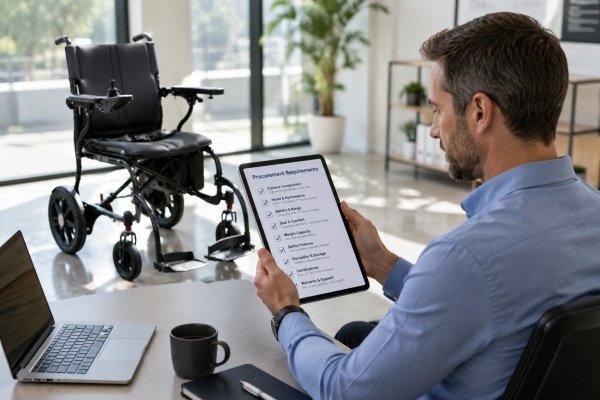
This guide walks you through exactly how to do that, step by step. Whether you’re sourcing your first container or scaling to thousands of units per year, these frameworks will help you separate capable manufacturers from those who only look good on paper.
How can I verify if an electric wheelchair factory has the actual production capacity they claim?
We've seen it happen more than once on our end of the industry — a competing factory quotes massive monthly output numbers, only for the buyer to discover mid-order that the "factory" is actually a trading company with no production line at all. This problem costs distributors thousands of dollars and months of wasted time.
Verify an electric wheelchair factory's actual production capacity by requesting third-party audit reports, conducting live video tours of production lines, reviewing historical export records through customs databases, checking monthly output documentation, and placing a trial order of 10–20 units to test real-world delivery performance.
Start with Documentation Before Anything Else
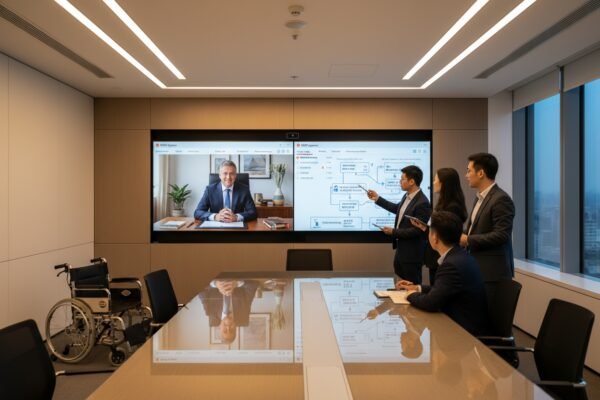
The first step is simple: ask for proof. A legitimate manufacturer will have factory audit reports from organizations like SGS, Bureau Veritas, or TÜV. third-party audit reports 2 These reports detail the actual floor space, number of production lines, worker count, and monthly output capacity. At our Foshan facility, we keep these documents ready for any buyer who asks. If a supplier hesitates or delays sending audit documents, that's a red flag.
You should also check customs databases. Platforms like ImportGenius or Panjiva let you search a supplier's export history. Consistent shipment records over several years indicate real production activity. Inconsistent or missing records suggest the supplier may be a middleman.
Conduct a Virtual or On-Site Factory Tour
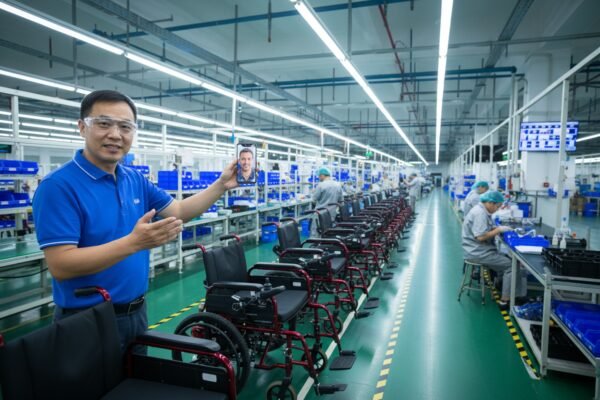
Nothing beats seeing the factory floor yourself. If you can't visit in person, request a live video tour — not a pre-recorded marketing video. During the tour, look for dedicated electric wheelchair assembly lines, separate areas for motor installation, controller programming, and battery integration. A factory that produces electric wheelchairs alongside completely unrelated products may lack specialization.
Place a Trial Order
This is the most reliable test. Order 10–20 units and evaluate everything: communication speed, production updates, packaging quality, and whether the delivery arrives within the quoted lead time. On our production floor, we encourage trial orders because they build trust faster than any sales pitch.
Key Capacity Benchmarks to Compare
| Assessment Criteria | Strong Indicator | Weak Indicator |
|---|---|---|
| Monthly Output | 500+ units documented | Vague or unverifiable claims |
| Factory Floor Size | 3,000+ sqm dedicated space | Shared or rented facilities |
| Worker Count | 50+ skilled assembly workers | Fewer than 10 on the floor |
| Lead Time (Standard) | 20–35 days consistent | Frequent delays or excuses |
| Trial Order Willingness | Accepts 10–20 unit orders | Demands 500+ unit minimums |
| Third-Party Audits | SGS, TÜV, or BV certified | No audits available |
Watch for Common Red Flags
Inconsistent documentation is the biggest warning sign. If the factory brochure says 1,000 units per month but the audit report shows 200, something is wrong. Also watch for suppliers who refuse video tours, can't name their component suppliers, or provide product photos that look like stock images. In our experience exporting to Europe and North America, buyers who skip verification steps often regret it within the first shipment cycle.
What specific manufacturing certifications should I demand to ensure my orders meet global quality standards?
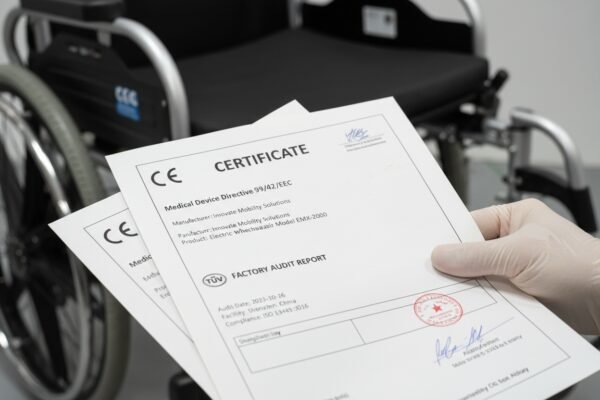
When we first started shipping electric wheelchairs to the EU market, one of our early buyers nearly had an entire container held at customs — all because of a missing CE conformity document. That one incident taught us that certifications aren't paperwork formalities. They are market access keys.
Demand ISO 13485 for quality management systems, CE marking for European markets, FDA registration for the United States, and ISO 7176 series compliance for wheelchair-specific safety testing. These certifications ensure your electric wheelchairs meet regulatory requirements for distribution in major global markets.
The Non-Negotiable Certifications
Different markets require different certifications. But some are universal indicators of manufacturing quality. ISO 13485 3 is the gold standard for medical device quality management. It means the factory has documented processes for every stage — from incoming material inspection to final product testing. If a supplier doesn't hold ISO 13485, they are not serious about the medical device market.
For Europe, CE marking 4 is mandatory. This involves testing the wheelchair against the Medical Device Regulation (MDR) and relevant EN standards. For the US, FDA 510(k) clearance or registration is required. We maintain active certifications for both markets because our buyers need the flexibility to distribute across regions.
Wheelchair-Specific Testing Standards
Beyond general medical device certifications, the ISO 7176 series 5 covers wheelchair-specific performance tests. These include static stability, dynamic stability, impact resistance, fatigue testing, and fire resistance. A supplier who can show ISO 7176 test reports from an accredited lab demonstrates genuine capability.
Certification Reference Table by Market
| Target Market | Required Certification | What It Covers | Issuing/Testing Bodies |
|---|---|---|---|
| European Union | CE Marking (MDR) | Safety, performance, biocompatibility | TÜV, SGS, BSI |
| United States | FDA Registration 6 / 510(k) | Medical device safety and efficacy | FDA, accredited test labs |
| Global (Quality System) | ISO 13485 | Quality management for medical devices | ISO-accredited auditors |
| Global (Wheelchair Tests) | ISO 7176 Series | Stability, durability, fire resistance | Accredited testing labs |
| Canada | MDEL License | Medical device import authorization | Health Canada |
| Australia | TGA Registration | Therapeutic goods compliance | TGA |
How to Verify Certifications Are Real
Don't just accept a PDF. Check certificate numbers against the issuing body's online database. For CE marks, verify the Notified Body number on the EU NANDO database. For FDA, search the 510(k) database or establishment registration list on the FDA website. We've encountered cases where competitors presented expired or fabricated certificates. Always verify independently.
Beyond Compliance: What Smart Buyers Also Check
Certifications tell you a factory meets minimum standards. But the best suppliers go further. Ask about incoming material inspection protocols, in-line quality checkpoints, and end-of-line testing procedures. At our facility, every electric wheelchair undergoes load testing, motor performance checks, battery cycling tests, and a full safety inspection before it leaves the floor. That level of quality control is what separates a reliable partner from a risky one.
Can the supplier's production line handle my custom OEM requests without delaying my delivery schedule?
Our engineering team fields OEM requests every week — custom frame colors, branded joystick housings, modified seat widths, specialized battery configurations. The requests vary, but the buyer's concern is always the same: "Will this delay my delivery?" It's a valid worry, because customization and speed often pull in opposite directions.
A capable electric wheelchair supplier handles OEM customization — including custom colors, logos, packaging, and functional modifications — within 30–45 days for standard custom orders. The key is evaluating their modular production design, dedicated OEM engineering team, component inventory depth, and documented track record of on-time custom deliveries.

Understanding the Customization Spectrum
Not all OEM requests are equal. Simple changes like logo printing, color swaps, and packaging design take minimal extra time. Functional modifications — changing motor power, adjusting frame geometry, integrating IoT modules — require engineering involvement and prototype cycles. Understanding where your request falls on this spectrum helps you set realistic expectations.
At our facility, we use a modular production approach 7. Our base wheelchair frames, motor systems, and controller units are designed in interchangeable modules. This means we can swap components for different market requirements without redesigning the entire product. It's a system we built specifically to balance customization speed with production efficiency.
Realistic Lead Times for Different OEM Levels
| Customization Level | Examples | Typical MOQ | Expected Lead Time |
|---|---|---|---|
| Level 1 — Cosmetic | Logo, color, packaging | 20–50 units | 20–30 days |
| Level 2 — Component Swap | Different battery, seat cushion, armrest | 50–100 units | 25–35 days |
| Level 3 — Functional Mod | Motor upgrade, controller reprogramming, frame resize | 100–200 units | 35–45 days |
| Level 4 — Full Custom Design | New frame design, proprietary electronics | 200+ units | 60–90 days |
Questions to Ask Before Placing a Custom Order
Start by asking: "Do you have a dedicated OEM engineering team, or does customization go through the same general production staff?" A dedicated team means faster turnaround and fewer errors. Next, ask for examples of past OEM projects with timelines. If the supplier can show you three to five completed custom projects delivered on time, that's solid evidence.
Also ask about their component inventory. A supplier who stocks common customization components — multiple motor types, several battery capacities, various controller boards — can fulfill orders faster than one who sources everything after receiving your order. We keep a running inventory of our most-requested components specifically for this reason.
How Peak Seasons Affect Custom Orders
The electric wheelchair industry has seasonal demand spikes, especially before Q4 when distributors stock for the holiday and new-year medical equipment budgets. During peak months, even well-equipped factories experience capacity strain. Smart buyers place custom orders during Q1 or Q2 to avoid peak-season bottlenecks. If you must order during peak, confirm in writing that your delivery date is locked before production begins.
Protecting Yourself Contractually
Always include delivery penalty clauses in your purchase agreement. A confident supplier won't object to reasonable penalties for late delivery. If a supplier refuses any accountability for timelines, that's a warning that they may not trust their own capacity. In our contracts, we include milestone updates — confirming component sourcing, production start, quality check completion, and shipment date — so buyers never feel left in the dark.
How do I assess if a manufacturer's supply chain is robust enough to support my long-term growth?
When we built our supply chain over the past years in Foshan, we learned one critical lesson the hard way: a factory is only as strong as its weakest supplier. One delayed motor shipment from a single-source component vendor once threatened an entire production run for a European distributor. Since then, we've restructured our entire sourcing approach. Your supplier's supply chain resilience 8 directly determines your business continuity.
Assess a manufacturer's supply chain robustness by examining their number of component suppliers per critical part, raw material inventory buffer levels, geographic diversification of sourcing, historical on-time delivery rates, contingency plans for disruptions, and their willingness to share sub-supplier audit data with you.

Why Supply Chain Depth Matters More Than Factory Size
A massive factory with a single motor supplier is more fragile than a smaller factory with three qualified motor suppliers. Electric wheelchairs depend on tightly integrated components: brushless DC motors, programmable joystick controllers, lithium-ion battery packs 9 (which hold 61% market share in North America), aluminum or steel frames, and electronic control systems. A disruption in any one of these halts production entirely.
Ask your prospective supplier: "How many qualified suppliers do you have for each critical component?" The answer should be at least two for every major part. We maintain relationships with multiple suppliers for motors, batteries, and controllers. This redundancy is what keeps our 20–35 day standard lead times consistent even when individual suppliers face delays.
The China Manufacturing Hub: Advantages and Risks
China dominates electric wheelchair manufacturing with cost advantages — economy models often range from $200–$400 FOB compared to $350–$650 in North America or Europe. But this cost advantage comes with supply chain concentration risk. Many Chinese factories source from the same regional component clusters. A localized disruption — a factory fire, a power restriction, a COVID-style lockdown — can ripple across dozens of manufacturers simultaneously.
Progressive manufacturers mitigate this by diversifying geographically. Some source batteries from one province and motors from another. Others maintain safety stock for 30–60 days of production. When evaluating a supplier, ask specifically about their inventory buffer policy and geographic spread of sub-suppliers.
Key Supply Chain Questions for Long-Term Partnerships
Here is a practical checklist to use during supplier evaluation calls or factory visits:
- How many qualified suppliers exist for each critical component?
- What is your raw material inventory buffer in days?
- Have you experienced any supply disruptions in the past 24 months? How did you handle them?
- Can you share audit reports for your tier-1 component suppliers?
- Do you have contingency sourcing agreements for emergency situations?
- What is your historical on-time delivery rate over the past 12 months?
Evaluating Future-Readiness
The electric wheelchair market is evolving rapidly. Lithium-ion battery technology is advancing with a projected CAGR of 9.06%. Smart wheelchair features — IoT connectivity, AI-assisted navigation, app-based diagnostics — are becoming mainstream. A supply chain built for today's products may not support tomorrow's innovations.
Ask the manufacturer about their R&D investment and whether their supply chain can accommodate new technologies. At our facility, we've already integrated lithium iron phosphate (LiFePO4) battery options and are testing IoT-enabled controller systems. A supplier who only offers lead-acid batteries and mechanical joysticks may not grow with your business.
Sustainability and Ethical Sourcing
Increasingly, European and North American distributors require documentation on ethical sourcing 10. This includes conflict mineral declarations for electronics, environmental compliance for battery disposal, and energy efficiency in manufacturing. A supplier who proactively provides these documents demonstrates both supply chain transparency and forward-thinking management.
The global market is projected to reach between $6.56 billion and $9.9 billion by the early 2030s. Distributors who partner with manufacturers capable of scaling sustainably will capture the largest share of that growth. When you assess a supplier's supply chain, you're not just evaluating today's capacity — you're evaluating whether they can be your partner for the next five to ten years.
Conclusion
Assessing an electric wheelchair supplier's production scale and manufacturing capabilities requires systematic verification — from factory audits and certifications to supply chain depth and OEM flexibility. Place trial orders, ask hard questions, and verify every claim independently. The right manufacturing partner doesn't just fill containers — they fuel your long-term growth.
Footnotes
1. Provides a comprehensive market report on the electric wheelchair industry, including market size and projections, aligning with the original context. ↩︎
2. Explains the definition, purpose, and benefits of independent third-party audits. ↩︎
3. Provides a detailed explanation of the ISO 13485 standard for quality management systems in the medical device industry. ↩︎
4. Explains the mandatory certification for medical devices in the European Union. ↩︎
5. Lists and describes various parts of the ISO 7176 series standards relevant to wheelchairs and assistive technology. ↩︎
6. Details the regulatory requirements for medical device establishment registration and device listing in the US. ↩︎
7. Explains the concept and benefits of a modular design approach in manufacturing, which aligns with the context of production capabilities. ↩︎
8. Defines the ability of a supply chain to anticipate, adapt, and recover from disruptions. ↩︎
9. Provides information on the benefits and characteristics of lithium-ion batteries for wheelchairs. ↩︎
10. Explains the practice of procuring products and materials responsibly and sustainably. ↩︎